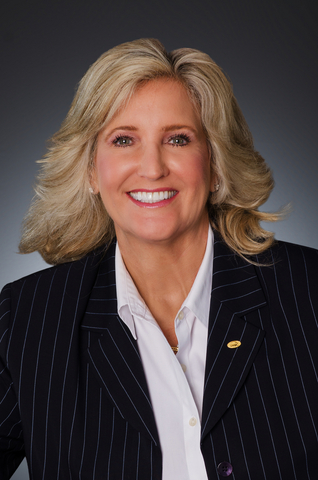
Cleveland Expands SWBC’s Leadership Footprint in Texas Insurance
SAN ANTONIO–(BUSINESS WIRE)–
SWBC is proud to announce that Joan Cleveland, President and CEO of SWBC Life Insurance Company and Executive Vice President of SWBC Property and Casualty Insurance Company, has been appointed by the Texas Commissioner of Insurance to the Texas Life and Health Insurance Guaranty Association (TLHIGA) Board of Directors. Cleveland will serve a term that runs until September 30, 2031.
Joan Cleveland, President and CEO of SWBC Life Insurance Company and Executive Vice President of SWBC Property and Casualty Insurance Company
“I am honored to serve on the TLHIGA Board of Directors and support the organization’s essential work of safeguarding Texans,” said Joan Cleveland. “Ensuring confidence and stability across the insurance landscape is paramount, and I look forward to contributing to this important work.”
Cleveland brings more than three decades of leadership and expertise in the life and health insurance industry. At SWBC, she leads strategic market development, product innovation, customer experience, and distribution strategies for the company’s life insurance operations.
“Joan’s leadership has strengthened SWBC’s reputation throughout the industry,” said Charlie Amato, Chairman and Co-founder of SWBC. “Her deep knowledge of the market and commitment to serving others make her an exceptional addition to the TLHIGA Board. We are incredibly proud to see her represent SWBC in a role that benefits Texans statewide.”
Cleveland is also a prominent national industry leader. She serves on the boards of the Life Insurers Council (LIC) and the Consumer Credit Industry Association (CCIA) and has previously been recognized as one of the Top 100 Women in Finance.
“Joan embodies the values SWBC was built on,” said Gary Dudley, President and Co-founder of SWBC. “Her appointment highlights the respect she has earned throughout her career, and I am confident she will bring valuable insight to TLHIGA’s mission.”
The Texas Life and Health Insurance Guaranty Association plays a vital role in consumer protection by ensuring that Texans continue to receive statutorily protected insurance policy benefits should a licensed life or health insurer or HMO be found to be insolvent and is placed into liquidation by a court. The Board is composed of nine members appointed by the Texas Commissioner of Insurance, representing both industry and public stakeholders.
About SWBC
As a diversified financial services company, SWBC provides financial institutions, businesses, and individuals with a wide range of insurance, mortgages, wealth management, employee benefits, and more. Headquartered in San Antonio, Texas, SWBC has partners and divisions across all 50 states and Mexico and manages businesses worldwide. No matter how wide its reach, SWBC always listens to our customers’ needs, analyzes their current situations, and recommends customized solutions. For more information about our innovative approach to personalized service, visit SWBC’s website.
Every year, tax season arrives with a familiar rhythm: gather the documents, crunch the numbers and file the returns. Although tax season is usually focused on the prior year, it offers life insurance professionals a powerful yet underused window for proactive planning.
Carly Brooks
The best planning insights might be sitting right in front of you on your client’s Form 1040. The tax return is more than a compliance document; it is both a diagnostic tool and a snapshot into your client’s financial life. Carefully reviewing your client’s Form 1040 can uncover needs related to income replacement, retirement readiness, legacy goals, long-term care, business planning and more.
This year, with the One Big Beautiful Bill Act creating the possibility of larger federal tax refunds for some taxpayers, clients may be more receptive than ever to these planning conversations. Use of these larger refunds may represent additional opportunities.
The 1040 can uncover planning opportunities that reveal unmet needs, spark deeper client conversations and shift tax time from a reactive moment into proactive, year‑round planning.
Filing status: Life changes that signal planning gaps
The top of page 1 of the 1040 may seem basic, but filing status tells one of the most essential stories. For example, a newly married couple may have combined finances for the first time. A recently divorced taxpayer may need insurance to secure alimony obligations. Head‑of‑household filers often have dependents relying on their income. Filing-status changes often prompt a review of protection needs or legacy planning considerations.
Act now:
Confirm whether life changes have triggered increased protection needs.
Review beneficiary designations, especially in the case of marriage, divorce, death, birth or adoption.
Discuss the need for income replacement or wealth equalization for blended families.
Dependents
Clients often think dependents change only when a new baby arrives. But dependents can also reflect elderly parents now under the clients’ care, a spouse’s children in a blended family or special‑needs dependents requiring lifetime planning.
Each of these can point to potential LTC, income replacement or estate planning conversations.
Act now:
Ask what would happen financially if the wage earner became ill or passed away.
Start a conversation on LTC if clients are already caregiving for someone else.
Line 1 (wages): Income replacement and spousal needs
Wages may be the simplest number on the return, but they quickly show how much income clients would need to replace after death or disability. You may also identify stay-at-home spouses who may have significant economic value despite lacking earned income.
Act now:
Perform a needs analysis using current income figures.
Review the economic value of a nonworking spouse, including how their loss would create new costs such as childcare and household management.
Connect income replacement to broader protection and legacy goals.
Lines 2–3: Interest and dividends
Taxable interest and dividends often represent conservative, low-yield holdings such as certificates of deposit, money market accounts, savings accounts or taxable investments producing ordinary income. Clients with significant amounts on these lines may be ideal candidates to reposition into more tax-efficient solutions, such as permanent life insurance with tax-advantaged cash value access.
Act now:
Ask clients about the purpose of these assets.
Use interest and dividend data to discuss tax diversification.
Lines 4–6: Individual retirement account, pension and Social Security distributions
If clients are already taking distributions, they’re either retired, forced to take required minimum distributions they don’t need, or using their retirement savings earlier than planned. All three situations can signal planning opportunities around LTC needs and legacy planning.
Act now:
Ask whether distributions are truly needed for income.
Introduce the idea of repositioning unneeded distributions into tax-efficient strategies.
If the clients are retired, discuss LTC and estate goals.
Line 7: Capital gains
Significant capital gains often indicate concentrated stock positions, real estate sales or passive investment turnover. Clients focused on legacy goals may be better served by repositioning highly taxable or volatile assets into tax-advantaged tools such as life insurance.
Act now:
Ask whether gains are part of ongoing investment activity or one-time events.
Explore whether the clients want these assets to pass to descendants.
Discuss the 3.8% net investment income tax for high earners.
Schedule 1: Business activities, rentals and retirement contributions
Schedule 1 is a treasure trove of additional information on your clients’ financial picture. For example, business income may open the door to conversations on a multitude of business planning needs, including buy-sell needs, key person and executive benefit opportunities.
Additionally, rental income may point to estate liquidity issues or unequal asset distribution among descendants, opening the door for discussions about asset transition and estate equalization.
Act now:
For business owners, discuss whether they have a buy-sell plan, and if so, if it is funded and has been recently reviewed.
Review whether key person insurance is in place.
Use rental income to discuss liquidity needs and equalization strategies.
Schedule A: Charitable giving
With doubled standard deductions now permanent under the OBBBA, fewer clients itemize deductions. Therefore, taxpayers with itemized deductions, reflected on Schedule A, often have significant charitable intent, large mortgages, or high state and local taxes (limited by the SALT cap of $40,000 for 2025 and subject to phase-out amounts).
For example, charitable giving is a natural segue to conversations around wealth replacement strategies and leveraging life insurance to amplify impact.
Act now:
Discuss using life insurance to boost charitable legacies.
Review mortgage balances versus existing coverage.
Explore tax diversification when SALT deductions are limited.
OBBBA refunds: The perfect conversation starter
Many clients may receive unexpectedly large refunds due to the OBBBA. Even though these refunds represent income withheld during the year and are being returned, for many clients, it feels like “found money,” which often makes them more receptive to planning recommendations.
Use the refund as a springboard to holistic planning conversations and forward-looking strategy.
Tax season doesn’t have to be a once-a-year administrative chore. With the right mindset, it can become a valuable annual prospecting and planning opportunity. The 1040 is rich with clues around life changes, income patterns, asset allocations, deductions, distributions and more. This window into your clients’ financial life opens the door to conversations clients should be having but rarely initiate.
This year, especially with OBBBA-related refunds creating additional talking points, leading with a proactive 1040-based analysis will help deliver greater client value and spark meaningful conversations to protect your clients’ financial future.
He was warm-hearted, witty, and multi-talented as a singer, woodworker, and gourmand who made his own sourdough starter and savored a nice wine with the dinner recipes he created. Murray Giles Hulse died peacefully in Charlottesville on February 1, 2026, with family singing to him at his bedside. In recent years he faced significant health challenges due to Parkinson’s Disease.
Murray was born in Elizabeth, NJ, to Stewart Harding Hulse and Katharine Jones Hulse on November 12, 1934. He was raised in Westfield, NJ, where he ran track in high school and where music became an important part of his life, beginning in his early years playing the clarinet and working at the local record shop.
Blessed with a beautiful baritone voice, he sang in choruses and select ensembles throughout high school and college. A member of Chi Psi fraternity and Choir, he graduated from Hamilton College in 1956 with a dual major in biology and music, which he liked to claim allowed him to teach frogs how to sing.
Soon after college graduation he began a career with Aetna Life Insurance Company that took him to Michigan, where he and his former wife welcomed and raised their three children in the northwest suburbs of Detroit. During that time, he studied voice with a renowned Metropolitan Opera baritone who said he wished he’d met Murray sooner since he “might have had a career.” He sang with the professional Kenneth Jewell Chorale and had numerous lead roles in musical theater productions in the greater Detroit area.
Wherever he was living Murray sang in the church choir, which is where he and Dory, his devoted wife and soul mate, first met. He was the one in the middle of the baritone section at rehearsals who wore an innocent expression while his fellow singers were guffawing over some witty pun he had just uttered.
After nearly two decades at Aetna, he transitioned to employee benefits consulting—a move that eventually drew him to Boston and New York City before he changed careers entirely. His departure from the corporate world turned a lifelong hobby into a full-time business. Murray started Time & Again Furnishings at home in Ridgewood, NJ, and soon moved to larger quarters as he grew the business of designing and building custom furniture and cabinetry. He was delighted when his son, Eddie, moved from Michigan to join him in the business in 1994. He brought his entrepreneurial business spirit to the Rotary Club of Ridgewood, serving on the Board and as President.
As a hobby Murray’s woodworking skill was top tier. Among his most ambitious projects was his restoration of a 1936 Chris-Craft, awarded a prize by the Lake Winnipesaukee (NH) Antique and Classic Boat Society. This recognition was particularly meaningful due to many decades he spent vacationing at Boulderwood, the special cottage his parents built on the lake which he acquired upon their passing, allowing another generation to enjoy truly memorable times there as well.
When the couple built their home in Earlysville, Virginia in 2002, the construction included a separate woodworking shop. Every room in the house shows his talent in its cabinetry, furniture, or both. Murray joined a club of fellow woodworkers, the Brothers in Wood, who share ideas, sometimes tools, and always camaraderie. When their church formed a Mission Construction Team, Murray didn’t hesitate to offer his skills to repair homes for those in need in Virginia’s coal country and post-Katrina New Orleans, making multiple trips to both locations.
A member of First Presbyterian Church in Charlottesville, Murray enjoyed singing in the church choir, spent a decade singing with the Oratorio Society of Virginia, and supported both Oratorio and the Charlottesville Symphony as a board member. A UVA Hoos fan alongside Dory, they enjoyed traveling together across the United States and three continents.
Murray is survived by Dory, his wife of 48 years, his sister Susan Logan, and three children from his marriage to Marilyn Jaffee: Katherine Loomis (Peter), Elizabeth Ludwig (Thomas), and Edward Hulse (Janine). He is also survived by Dory’s three sons: Matthew (Linda), Peter (Tabby), and Christopher (Carmen) Bailey, as well as a total of 15 grandchildren and 7 great-grandchildren. He also leaves nephews Daniel Logan (Sophia) and Stephen Hulse (Grace), nieces Melissa Hulse (Thomas Dingus) and Jennifer Hulse Mitchell, and five greatnieces and nephews. His brother Stewart Hulse Jr. predeceased him.
A memorial service will be held at 11 a.m. on Saturday, April 11 at the First Presbyterian Church, 500 ParkStreet, Charlottesville. A reception will follow in the Fellowship Hall. In lieu of flowers, memorial donations may be made to the Charlottesville Symphony, Oratorio Society of Virginia, First Presbyterian Church’s Music Endowment Fund or its Honduras & Mission Fund. Teague Funeral Home has assisted the family with arrangements (TeagueFuneralHome.com). Murray’s ashes will be placed in Monticello Memory Gardens.
He was warm-hearted, witty, and multi-talented as a singer, woodworker, and gourmand who made his own sourdough starter and savored a nice wine with the dinner recipes he created. Murray Giles Hulse died peacefully in Charlottesville on February 1, 2026, with family singing to him at his bedside. In recent years he faced significant health challenges due to Parkinson’s Disease.
Murray was born in Elizabeth, NJ, to Stewart Harding Hulse and Katharine Jones Hulse on November 12, 1934. He was raised in Westfield, NJ, where he ran track in high school and where music became an important part of his life, beginning in his early years playing the clarinet and working at the local record shop.
Blessed with a beautiful baritone voice, he sang in choruses and select ensembles throughout high school and college. A member of Chi Psi fraternity and Choir, he graduated from Hamilton College in 1956 with a dual major in biology and music, which he liked to claim allowed him to teach frogs how to sing.
Soon after college graduation he began a career with Aetna Life Insurance Company that took him to Michigan, where he and his former wife welcomed and raised their three children in the northwest suburbs of Detroit. During that time, he studied voice with a renowned Metropolitan Opera baritone who said he wished he’d met Murray sooner since he “might have had a career.” He sang with the professional Kenneth Jewell Chorale and had numerous lead roles in musical theater productions in the greater Detroit area.
Wherever he was living Murray sang in the church choir, which is where he and Dory, his devoted wife and soul mate, first met. He was the one in the middle of the baritone section at rehearsals who wore an innocent expression while his fellow singers were guffawing over some witty pun he had just uttered.
After nearly two decades at Aetna, he transitioned to employee benefits consulting-a move that eventually drew him to Boston and New York City before he changed careers entirely. His departure from the corporate world turned a lifelong hobby into a full-time business. Murray started Time & Again Furnishings at home in Ridgewood, NJ, and soon moved to larger quarters as he grew the business of designing and building custom furniture and cabinetry. He was delighted when his son, Eddie, moved from Michigan to join him in the business in 1994. He brought his entrepreneurial business spirit to the Rotary Club of Ridgewood, serving on the Board and as President.
As a hobby Murray’s woodworking skill was top tier. Among his most ambitious projects was his restoration of a 1936 Chris-Craft, awarded a prize by the Lake Winnipesaukee (NH) Antique and Classic Boat Society. This recognition was particularly meaningful due to many decades he spent vacationing at Boulderwood, the special cottage his parents built on the lake which he acquired upon their passing, allowing another generation to enjoy truly memorable times there as well.
When the couple built their home in Earlysville, Virginia in 2002, the construction included a separate woodworking shop. Every room in the house shows his talent in its cabinetry, furniture, or both. Murray joined a club of fellow woodworkers, the Brothers in Wood, who share ideas, sometimes tools, and always camaraderie. When their church formed a Mission Construction Team, Murray didn’t hesitate to offer his skills to repair homes for those in need in Virginia’s coal country and post-Katrina New Orleans, making multiple trips to both locations.
A member of First Presbyterian Church in Charlottesville, Murray enjoyed singing in the church choir, spent a decade singing with the Oratorio Society of Virginia, and supported both Oratorio and the Charlottesville Symphony as a board member. A UVA Hoos fan alongside Dory, they enjoyed traveling together across the United States and three continents.
Murray is survived by Dory, his wife of 48 years, his sister Susan Logan, and three children from his marriage to Marilyn Jaffee: Katherine Loomis (Peter), Elizabeth Ludwig (Thomas), and Edward Hulse (Janine). He is also survived by Dory’s three sons: Matthew (Linda), Peter (Tabby), and Christopher (Carmen) Bailey, as well as a total of 15 grandchildren and 7 great-grandchildren. He also leaves nephews Daniel Logan (Sophia) and Stephen Hulse (Grace), nieces Melissa Hulse (Thomas Dingus) and Jennifer Hulse Mitchell, and five great-nieces and nephews. His brother Stewart Hulse Jr. predeceased him.
A memorial service will be held at 11 a.m. on Saturday, April 11 at the First Presbyterian Church, 500 Park Street, Charlottesville. A reception will follow in the Fellowship Hall. In lieu of flowers, memorial donations may be made to the Charlottesville Symphony, Oratorio Society of Virginia, First Presbyterian Church’s Music Endowment Fund or its Honduras & Mission Fund. Teague Funeral Home has assisted the family with arrangements (TeagueFuneralHome.com). Murray’s ashes will be placed in Monticello Memory Gardens.
OLDWICK, N.J.–(BUSINESS WIRE)– AM Best has removed from under review with developing implications and downgraded the Financial Strength Rating to A (Excellent) from A+ (Superior) and the Long-Term Issuer Credit Ratings to “a+” (Excellent) from “aa-” (Superior) of Banner Life Insurance Company (Frederick, MD) and William Penn Life Insurance Company of New York (New York, NY) collectively referred to as Banner Life Group (Banner). The outlook assigned to these Credit Ratings (ratings) is stable.
The ratings reflect Banner’s balance sheet strength, which AM Best assesses as very strong, as well as its adequate operating performance, favorable business profile and appropriate enterprise risk management (ERM). The strategic importance of Banner, to its parent company, Meiji Yasuda Life Insurance Company (Meiji Yasuda), also was considered as part of the ratings.
The rating actions reflect the recent completion of the acquisition of Banner by Meiji Yasuda and the standalone assessment decoupled from Legal & General Group Plc’s (L&G) rating. AM Best expects Banner’s management team, organizational structure and business strategy to remain with some oversight provided by Meiji Yasuda who will now have representation on the group’s board of directors. The ratings reflect the early stages of Banner’s establishment as Meiji Yasuda’s main U.S. individual life insurer and its only pension risk transfer (PRT) presence, expanding its footprint in the U.S. insurance markets. Banner’s advanced underwriting technological capabilities are expected to be a competitive advantage in a market that is shaped by consumer experience. The group has a track record of growth in its core markets as a leading term life carrier, and benefits from a strategic partnership in growing its U.S. PRT business with both Meiji Yasuda and L&G. Banner’s premiums growth is expected to continue to generate favorable statutory operating gains going forward.
Banner’s balance sheet reflects its risk-adjusted capital, which is assessed at the strongest level, as measured by Best’s Capital Adequacy Ratio (BCAR). AM Best notes that capital has fluctuated historically due to statutory business strain and the impact of reinsurance transactions, but capital contributions have been utilized to maintain appropriate capitalization. As part of the strategic partnership with L&G, Banner is reinsuring a material amount of its in-force and new PRT business to a reinsurance entity within the L&G organization. Banner is expected to maintain a target risk-based capital of at least 400% under its new ownership. The investment mix is currently in line with peers, with allocations to a diversified portfolio of investment grade bonds and commercial mortgage loans.
Banner’s ERM program is comprehensive and well-developed as the organization maintains good governance structure and appropriate controls, and this is expected to be enhanced further under its new ownership.
This press release relates to Credit Ratings that have been published on AM Best’s website. For all rating information relating to the release and pertinent disclosures, including details of the office responsible for issuing each of the individual ratings referenced in this release, please see AM Best’s Recent Rating Activity web page. For additional information regarding the use and limitations of Credit Rating opinions, please view Guide to Best’s Credit Ratings. For information on the proper use of Best’s Credit Ratings, Best’s Performance Assessments, Best’s Preliminary Credit Assessments and AM Best press releases, please view Guide to Proper Use of Best’s Ratings & Assessments.
AM Best is a global credit rating agency, news publisher and data analytics provider specializing in the insurance industry. Headquartered in the United States, the company does business in over 100 countries with regional offices in London, Amsterdam, Dubai, Hong Kong, Singapore and Mexico City. For more information, visit www.ambest.com.
Advantage Capital signed an agreement with global investment manager Oaktree Capital Management to provide critical funding support for its financially troubled life insurance subsidiaries.
The firm known as A-Cap announced the deal Friday for Oaktree to acquire a controlling stake in Atlantic Coast Life Insurance Co., while also providing capital to Sentinel Security Life Insurance Co.
Oaktree will fund a “surplus note investment into a newly created captive insurance company,” the new partners explained in a news release.
A-Cap battled state regulators and AM Best in recent years over the financial strength of Atlantic Coast and Sentinel Security. On Jan. 23, AM Best downgraded the financial strength ratings of both insurers. In 2024, A-Cap sued AM Best over a proposed ratings downgrade – a lawsuit later settled.
Kenneth King, chairman and CEO of A-Cap, stressed Oaktree’s “track record of investing alongside insurers, particularly during times of transition.
“Oaktree’s insurance-focused credit expertise and flexible, long-term capital will support disciplined growth of our balance sheet, enhance our asset liability profile, and strengthen our ability to serve our policyholders and distribution partners over the long term,” he added in a news release.
All of the net proceeds from the transactions will be used to “support the growth and long-term objectives of Sentinel and its policyholders,” the release said.
“The company will benefit from our meaningful experience in regulated carve-outs as it works to complete its pre-closing transaction milestones,” said Patrick C. George, senior vice president, global opportunities, at Oaktree. “Following closing, we believe both Atlantic Coast Life and Sentinel will be well positioned to prioritize policyholder protection, financial strength, and sustainable long-term growth.”
Oaktree is a global investment manager specializing in alternative investments, with $223 billion in assets under management as of Dec. 31, 2025. The firm “emphasizes an opportunistic, value-oriented, and risk-controlled approach to investments in credit, equity, and real estate,” the release said.
Financial strength questioned
AM Best said its ratings downgrade is “based on weakness in A-CAP Group’s business profile as manifested in the material decrease in new premium and material increase in surrenders/outflows, as well as reputational damage resulting from publicized regulatory rulings.”
Regulators argued A-Cap used flawed, internal valuations to overstate the worth of high-risk assets, while independent audits valued those same assets at significantly lower amounts. While the states banned the insurers from writing new business, administrative law judges in both states later stayed or overturned these orders.
A-Cap provided information that “demonstrates surrenders and outflows have decreased,” AM Best noted. The insurers’ primary focus is the fixed index annuity market, a “dynamic and credit sensitive sector with strong long-term prospects,” the ratings agency added.
AM Best downgraded the FSR from B++ (Good) to B (Fair) and the Long-Term Issuer Credit Rating from “bbb” (Good) to “bb+” (Fair) for both A-Cap life insurers.
“The downgrades are also based on a decline in AM Best’s overall assessment of A-CAP Group’s balance sheet strength,” the release added. “AM Best acknowledges A-CAP Group’s pending capital raise, but also recognizes its level of illiquid assets, concentrated reinsurance leverage, which is mitigated through the use of funds held and modified coinsurance agreements, along with a recent decline in its overall capital adequacy ratios that have not fully recovered to historic levels.”
If 2025 was the year of accelerated digital adoption in life insurance and annuities, 2026 is shaping up to be the year that acceleration turns into alignment and permanent transformation.
Pat O’Donnell
Last year, carriers, distributors and advisors moved beyond experimentation. Digital tools became embedded across underwriting, distribution and service. Buyers became more informed, more self-directed and more demanding, with expectations of seamless, transparent experiences comparable to what they receive in other financial services sectors.
But the urgency behind these shifts runs deeper than technology alone. The retirement preparedness gap in the U.S. remains profound, and it’s reshaping what consumers need from insurers and financial professionals. A recent National Institute on Retirement Security analysis of census data found that the median retirement savings for working-age Americans is just $955 when including those with no savings. Yet even among workers with defined contribution plan savings, the median balance is only $40,000. Those figures underscore why lifetime income, protection solutions and modern planning tools are becoming more central to the financial conversation.
Meeting this need at scale will require more than incremental upgrades. It will require modern, data-connected platforms that use artificial intelligence to simplify the buying journey, personalize guidance and product fit, and help advisors engage customers with greater speed, clarity and confidence. In 2026, the focus is set to move beyond digitizing individual steps and toward reinventing the end-to-end operating model. The forces shaping the next chapter of life insurance and annuities will test how quickly carriers, distributors and advisors can modernize workflow, data and customer experiences.
End-to-end AI requires a strong, modern data foundation
AI is rapidly expanding from isolated efficiencies into an across-the-board accelerator, touching everything from application intake and underwriting triage to product engineering and recommendations. However, the real change for the industry doesn’t come from hype or buzzwords, but from improved speed and momentum. Tasks that once took weeks or even months can now be compressed into days, reshaping both customer expectations and operational reality.
But here’s the catch – AI can only scale as far as your data foundation allows.
In 2026, many carriers and distributors still risk hitting the same barrier: If data isn’t connected, standardized, permissioned and governed, it can’t reliably power AI-driven workflows, especially when a customer journey spans multiple steps and partners. The winning firms will make unification and governance the foundation for meaningful automation and intelligence, instead of tacking AI onto legacy systems and infrastructure.
Hyper-personalized product and journey designs
With a stronger data foundation, AI can do more than speed up the process. It can make the experience feel more individualized to each specific customer and their long-term financial planning needs. Carriers are increasingly personalizing premiums, coverage levels, and underwriting pathways based on geographic, demographic, and behavioral signals.
In the near term, the biggest gains will come from personalization that improves relevance and confidence by helping the right customer see the right option at the right time. This reduces dead ends and guides decisions through simpler, clearer digital journeys. That kind of personalization can make life insurance feel more accessible without rebuilding every product from scratch.
Over time, the industry may push toward modular, configurable approaches, but regulation will influence how quickly the most dynamic product-level personalization becomes reality. The priority for the coming year should be to build out capabilities, so that organizations are ready to move faster and deploy personalized strategies more aggressively as frameworks evolve.
Distribution is becoming smarter and data-driven
As AI leads to increased workflow speed, and personalization promises improved relevance and clarity, distribution becomes the next place the industry can turn intelligence into measurable growth.
Distribution is moving from broad outreach to precision engagement, with AI accelerating that shift. Instead of casting a wide net, advisors can use data-driven insights to focus on where demand is strongest, which households are most likely to convert, and what next-best actions will improve both placement and persistency.
At the same time, speed is becoming a real competitive differentiator. As distribution consolidates and new selling models emerge, carriers face growing pressure to support quoting, underwriting and issuance quickly enough to keep customers engaged in the moment. For advisors, the push for faster, data-led distribution strengthens their role rather than diminishing it. Technology should help advisors translate complexity and more confidently guide decisions – reducing the time they have to spend chasing status updates or explaining delays.
Shifting wealth and retirement demographics are reshaping annuity demand and advisor toolkits
AI, personalization and data-driven distribution are changing how the industry operates, compressing timelines and making experiences more targeted. But even perfect technology doesn’t create demand on its own. One of the biggest forces in 2026 is centered on who’s entering retirement, how wealth is changing hands and what’s still missing from Americans’ retirement planning puzzles, placing lifetime income at the forefront of financial conversations.
The Great Wealth Transfer from baby boomers to millennials and Generation Z is reshaping who is making retirement decisions and what they expect from the process. At the same time, Peak 65 demographics are expanding the pool of households actively planning for retirement income, helping sustain record demand for annuities. LIMRA projects U.S. retail annuity sales will finish above $460 billion in 2025, marking the fourth consecutive year of record sales, and forecasts that 2026 sales will remain above $450 billion; a clear sign this momentum is here to stay.
What’s driving that momentum is not just rates or product cycles, but a changing buyer – one who expects clarity and control. As younger generations inherit and assume greater financial decision-making power, they bring digital expectations to the process, but they’re not necessarily risk-seeking. Amid ongoing economic uncertainty, many are looking for stability. This keeps guaranteed income and protection features compelling, but only if the experience is clear, modern, and easy to navigate.
That puts real pressure on the advisory workflow. As a result, removing the friction that slows advisors down is the biggest opportunity in the year ahead. If annuities are to meet this moment, streamlined product selection, accurate suitability documentation and real-time case status will be paramount so fewer applications are bogged down in not-in-good-order follow-ups.
When that friction goes away, advisors spend less time chasing paperwork and more time delivering planning value.
Digital-first, ecommerce-inspired journeys are the baseline
All these forces converge at the most impactful point where customers, carriers and advisors actually feel them – the end-to-end journey from discovery and application through underwriting, servicing and ongoing planning.
In 2026, customer expectations are increasingly shaped by digital commerce, not financial services. If consumers can complete complex, high-stakes transactions online, including everything from cars to mortgages to investments, why should life insurance and annuities be any different? More importantly, the rising expectation isn’t about just a few digital touchpoints at the start, but about increased and reliable continuity throughout the entire buying journey.
Customers want their experience to feel clear and predictable, with simpler language, fewer surprises and visible progress from start to finish. Advisors need real-time case visibility and clean, guided next steps so they can stay in control of the client conversation, instead of chasing updates across multiple systems. That includes fewer NIGO setbacks, less back-and-forth after submission, and the ability to answer the basic questions of where things stand and what happens next without guesswork.
Carriers that deliver seamless end-to-end journeys will continue to lead by keeping the process connected through underwriting and servicing, with modern e-applications, real-time insights and consistent case tracking. The practical wins are straightforward: clearer requirements up front, earlier detection of issues before they become NIGO, and status transparency that keeps momentum intact. Legacy or disconnected systems won’t just slow teams down internally; they will show up as friction that drives drop-off, delays decisions and erodes trust at key moments in the buying journey.
The 2026 story evolves from acceleration to alignment
Taken together, the themes shaping 2026 are not separate trends but one connected story: AI, supported by stronger data foundations, is improving speed, personalization is raising expectations for relevance, distribution is becoming more precise and time-sensitive, and demographic demand is keeping lifetime income at the center of planning conversations. All this is done through a digital-first, ecommerce-centered lens that consumers increasingly expect.
As that intelligence scales, the non-negotiable requirement is confidence in the decisions being made and the outcomes being delivered. The organizations that will lead won’t be the ones that adopt the newest tools fastest, but the ones that connect data, workflow and experience into a coherent end-to-end operating model and can consistently explain a recommendation, requirement, or the needed next step.
Instead of treating modernization as disconnected initiatives – an AI workstream here, a digital project there – alignment through governed foundations, configurable platforms and digital-first journeys will be what delivers the greatest advantage.
The common thread of 2025 was acceleration; 2026 will define who can translate that acceleration into a durable advantage.
Oaktree plans to acquire Atlantic Coast Life from A-CAP
Net transaction proceeds and additional capital support provided to Sentinel Security Life Insurance Company
NEW YORK–(BUSINESS WIRE)–
Advantage Capital Holdings, LLC (“A-CAP” or “the Company”), a New York-based insurance and financial services company with over $16 billion in assets under management, and funds managed by Oaktree Capital Management, L.P. (“Oaktree”), a leader among global investment managers specializing in alternative investments, have signed a master transaction agreement in which Oaktree plans to acquire a controlling stake in Atlantic Coast Life Insurance Company (“ACL”) while concurrently providing capital support to Sentinel Security Life Insurance Company (“Sentinel”) via funding a surplus note investment into a newly created captive insurance company. All of the net proceeds from these transactions will be used to support the growth and long-term objectives of Sentinel and its policyholders.
“A-CAP is pleased to work with Oaktree given its track record of investing alongside insurers, particularly during times of transition,” said Kenneth King, Chairman and CEO of A-CAP. “While we have significant work ahead of us to successfully carry out the transactions contemplated by our agreement, Oaktree’s insurance-focused credit expertise and flexible, long-term capital will support disciplined growth of our balance sheet, enhance our asset liability profile, and strengthen our ability to serve our policyholders and distribution partners over the long term.”
“We are pleased to reach agreement with A-CAP on a multifaceted transaction that we believe benefits all stakeholders of Sentinel and Atlantic Coast Life. We look forward to working with the many parties involved – namely, the state regulators, rating agencies, reinsurers, and distributors – as A-CAP and its carriers work to complete the various steps required to close the transaction” added Jake Wagner, Managing Director, Global Opportunities, at Oaktree.
“Our planned acquisition of Atlantic Coast Life is the latest in a series of insurance investments where we partner with companies during a period of market dislocation or transition,” said Patrick C. George, Senior Vice President, Global Opportunities, at Oaktree. “The company will benefit from our meaningful experience in regulated carve-outs as it works to complete its pre-closing transaction milestones. Following closing, we believe both Atlantic Coast Life and Sentinel will be well positioned to prioritize policyholder protection, financial strength, and sustainable long-term growth.”
The closing of the transactions contemplated by the master transaction agreement is subject to A-CAP performing all of its obligations thereunder, including A-CAP’s successful implementation of a series of restructuring transactions to effectuate the carve-out of ACL, as well as receipt of all required regulatory approvals and satisfaction of other customary closing conditions.
Moelis & Company LLC acted as exclusive financial advisor to A-CAP. Michelman & Robinson, LLP and Croke Fairchild Duarte & Beres LLC served as legal advisors to A-CAP.
Goldman Sachs & Co. LLC acted as exclusive financial advisor to Oaktree. Debevoise & Plimpton LLP served as legal advisor to Oaktree.
About Oaktree
Oaktree is a leader among global investment managers specializing in alternative investments, with $223 billion in assets under management as of December 31, 2025. The firm emphasizes an opportunistic, value-oriented, and risk-controlled approach to investments in credit, equity, and real estate. The firm has more than 1,400 employees and offices in 26 cities worldwide. For additional information, please visit Oaktree’s website at http://www.oaktreecapital.com/.
About A-CAP
A-CAP is a holding company owning multiple insurance and financial businesses on its unique and synergistic platform. These businesses include primary insurance carriers, an SEC registered investment adviser, reinsurance vehicles, and marketing organizations. With broad knowledge across the insurance and investment sectors, A-CAP’s management team has diverse experience and provides comprehensive services to policyholders, insurance company clients and capital partners. Launched in 2013, A-CAP is a privately held company with offices located in New York, Charleston, Miami, and Salt Lake City. For more information, visit http://www.acap.com/.
A group of large PHL Variable policyholders, and the Connecticut insurance commissioner both took aim at Nassau Financial Group in separate court filings this week.
Both the policyholders and interim Commissioner Joshua Hershman, serving as the rehabilitator in the proposed liquidation of the financially troubled PHL, are after the same thing: Money.
Hundreds of millions of dollars are at stake as Connecticut regulators navigate the liquidation proposed by Hershman on Dec. 31, 2025. State Superior Court Judge Daniel J. Klau approved rehabilitation for PHL in May 2024.
Since then, Judge Klau has ruled on several twists and turns in the case. Former insurance commissioner Andrew Mais steadfastly pursued a rehabilitation plan before retiring in late November 2025. Hershman abruptly pivoted to liquidation in a Dec. 31 status report.
That ratcheted up the pressure to find an equitable financial solution. Particularly for so-called “over-the-cap” policyholders, who are entitled to death benefits in excess of $300,000, a moratorium was established by a June 2024 court order. That figure mirrors state guaranty association limits.
A group of over-the-cap policyholders filed a motion Tuesday to obtain “relief” allowing the group to pursue “certain claims against Nassau Financial Group (and related subsidiaries), Golden Gate Capital and others … for looting PHL at the expense of the” policyholders.
The group alleged self-dealing, breach of fiduciary duty, fraudulent and negligent misrepresentation, state unfair trade and insurance violations, and civil Racketeer Influenced and Corrupt Organizations Act violations.
‘Facilitate an orderly transition’
Over-the-cap policyholders “will pursue these tort claims on a fully contingent basis that will be accretive to PHL in rehabilitation and facilitate an orderly transition from rehabilitation to liquidation,” their motion reads.
Meanwhile, Hershman filed a status update on Tuesday. In it, he provided more details of claims against Nassau and Golden Gate hinted at in the Dec. 31 report.
Affiliates of Nassau Financial provide administrative services to the rehabilitator under agreements that precede the rehabilitation proceeding. From May 2024 through December 2025, Nassau charged the PHL companies $10.7 million for investment services and $65.6 million for administrative services.
“There are pending disputes between Nassau and the Rehabilitator concerning these arrangements and charges assessed under the agreements,” Hershman wrote. “The Rehabilitator believes that the charges … have been and continue to be materially above market as a result of the allocation of certain expenses to PHL. Nassau disputes this.”
As of the end of 2025, there are about 8,000 active universal life insurance policies, with about 3,200 having death benefits greater than the applicable state guaranty association limits, the status report said.
Of those, 343 of the active over-the-cap UL policies “appear to be owned by institutional investors,” Hershman wrote, which represents 26% of the total outstanding death benefits on the policies.
Additional policyholder claims
In a memorandum supporting their filing, the over-the-cap policyholders also alleged that the court-appointed rehabilitator has failed to aggressively pursue claims against Nassau and Golden Gate despite acknowledging that potential claims against the companies may exist.
They further claim the rehabilitator may have a conflict of interest because some of the transactions now under scrutiny were previously approved by state regulators.
Nassau Financial Group (then Nassau Re) acquired PHL Variable as part of a 2016 purchase of The Phoenix Companies for $217.2 million.
The over-the-cap policyholders say that PHL was weakened through complex reinsurance arrangements involving affiliated entities, including transactions with captive insurers and offshore reinsurers.
“Almost immediately following the acquisition, PHL was systematically gutted by Nassau and its affiliates and rendered hopelessly insolvent,” the policyholders’ memo reads. “Billions in sham, circular, non-arm’s length reinsurance transactions were consummated by and among various PHL and Nassau affiliates and captive insurance companies located in Connecticut, Vermont and the Cayman Islands.”
According to the policyholders, those transactions allowed affiliated companies to replace assets on PHL’s balance sheet with obligations from related entities, while the insurer took credit for billions of dollars in reserve relief.
The policyholders also pointed to litigation in Delaware involving alleged stranger-originated life insurance transactions that they say raised additional concerns about dealings involving Nassau-affiliated entities.
If granted permission to intervene, the policyholders argued that any recoveries could ultimately benefit the rehabilitation estate while allowing policyholders to seek damages for losses above guaranty association limits.
The policyholders asked the court to schedule a hearing on the request as soon as possible.
As a licensed life insurance agent for almost 20 years, I can count on one hand the number of times an applicant has requested a quote for life insurance that exceeded the average cost of burial, cremation, and funeral services.
Once I ask a few questions, I quickly determine that the amount of coverage the applicant is requesting is simply not enough for their current lifestyle.
In my opinion, life insurance has four purposes: 1) To cover the cost of your burial, cremation, and/ or funeral services: As of today, the national average for these services range between $5,000 and $10,000.
2) To pay off your debt: You should only focus on your secured debt (home, vehicles, etc.) that you want to leave to your loved ones upon your death. Never focus on your unsecured debt (credit cards, medical bills, personal loans, student loans, etc.). The only exception to this rule is, if the unsecured debt is in you and a joint applicant’s name, treat it as a secured debt. I say that because, due to the unsecured debt being a joint responsibility, the institution or lender will still pursue collection procedures from the living party upon your death. Other than that reason, unsecured debts typically die with you.
3) To provide financial support for those who rely on your income: If you have a spouse, dependent children, etc. that requires your source of income to cover daily and living expenses, their needs do not change upon your death. In most cases, their financial needs increase following the death.
4) To leave an inheritance to your loved ones: Regardless of how much income you make, how much money you have saved, or the size of your investment portfolio, life insurance is a great tool to use in order to pass down wealth to your loved ones and the next generation for many years to come. Out of all four purposes, this is my absolute favorite one!
Outside of yourself and your spouse, you should also have life insurance coverage on your dependent children. Keep in mind, due to them being in a position where they rely on your income and not the opposite, you should only purchase enough coverage on them to cover their burial, cremation, and/or funeral services When purchasing life insurance coverage, you want to always take advantage of the group life insurance on your job. These policies are very inexpensive. Due to the low cost, I recommend you maximize the amount you purchase for yourself, your spouse, and your dependent children.
Be mindful, since the life insurance premiums are are being paid out of your paycheck, you will not have coverage in the event of a involuntarily or voluntarily job loss, if you have to take time off from work due to an illness of yourself or a loved one, or any other reason that would require you not to receive a paycheck for an extended period of time. For those reasons, I highly recommend that in addition to your group life insurance on your job, you should also have a policy through a private life insurance company. Doing SO, guarantees that you are never in a position of not having life insurance coverage in place.
When choosing life insurance coverage through a private company, I only recommend you get term life insurance. Never purchase cash value life insurance policies (universal life, variable life, variable universal life, whole life, etc.). These cash value policies are outrageously expensive and horrible products. In addition, the advertising, benefits, and payout amounts associated with these policies are very misleading.
In addition to cash value life insurance policies, never purchase credit life insurance policies on your debt (credit cards, mortgages, personal loans, etc.). These policies are also outrageously expensive and horrible products. Remember, your debt will already be covered in your “regular” life insurance policy, so there is no need to duplicate coverage. The only exception to this rule is, if you do not currently have life insurance coverage due to being classified as uninsurable because of age, illness, and/or physical condition. In this case, some coverage is better than none, even if it is more expensive.
Some more options for getting life insurance if you are classified as uninsurable is to take advantage of the group life insurance on you or your spouse’s job, at your credit union Or bank, or with civic OT professional organizations you may be a part of. These group life insurance options typically do not require you to answer any medical questions or obtain a medical examination.
Having the proper amount of life insurance in place that your loved ones deserve and need is just one way to show them how ‘‘unselfish” you really are. Remember, the opposite of ‘‘unselfish” is ‘‘selfish.”’ For a quote on some affordable life insurance for you and your loved ones, call me, Tim C. Lee, at (601) 842-3226. I am a licensed life insurance agent in the states of Louisiana, Mississippi, and Texas.
Tim C. Lee is the CEO & Founder of TCL Financial & Tax Services, andthe host of “The TCL Show” that airs every Monday from 6:00 p.m. to 7:00 p.m. CST on WMPR 90. I FM in Jackson, MS. This is the show that is about “You, Life, and Money.” Got an article idea or a question you would like answered, e-mail Tim at nclee@TCLFinancia